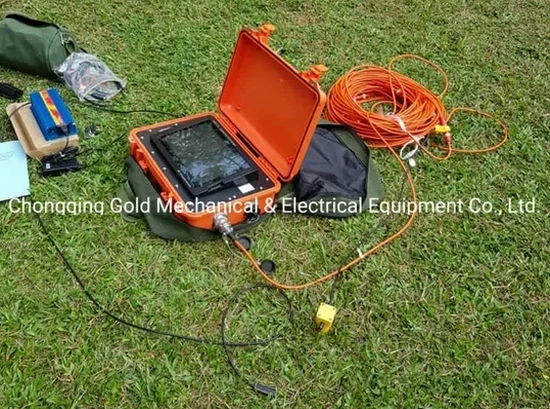
We keep seeing the same mistake on job sites around Columbia: a standard handful of boreholes spaced 50 feet apart misses a buried channel or a weathered granitic pinnacle, and the grading plan falls apart two weeks into earthwork. The saprolite here is deceptive. What looks like competent rock in one SPT blow count can be completely rotten six feet away. Seismic tomography — both refraction and reflection — fills that gap. It gives you a continuous 2D cross-section of the subsurface between control points instead of isolated vertical logs. On a recent warehouse pad near the Congaree River floodplain, the tomography line caught a paleochannel that three borings had skipped entirely. For projects that need IBC Chapter 16 site classification, we pair this with MASW surveys to build a defensible Vs30 model across the entire footprint.
A seismic velocity tomogram shows the weathered-rock transition in gradational detail that no drilling program, no matter how dense, can physically capture.