GEOTECHNICAL ENGINEERING
COLUMBIA SOUTH CAROLINA
HomeIn-Situ TestingField permeability test (Lefranc/Lugeon)

Field Permeability Testing (Lefranc & Lugeon) in Columbia SC

Technical studies that support your project.

LEARN MORE

Columbia sits on the Fall Line, where the hard Piedmont rock meets the Coastal Plain sediments. This geology creates a real headache for water management. You get tight residual silts on one side. Fractured gneiss with high flow on the other. A standard lab test won't cut it here. You need to measure hydraulic conductivity in-situ. Our lab runs the Lefranc test in granular horizons and the Lugeon test in bedrock. We see a lot of projects near the Congaree River floodplain where the water table shifts seasonally. Before designing a dewatering system or a cutoff wall, engineers use this data to predict seepage rates. We follow ASTM D5092 for packer tests and combine it with borehole logging to map the water-bearing zones accurately.

A proper Lugeon test doesn't just measure flow; it reveals the mechanical behavior of the rock fractures under pressure.
Our service areas

How we work

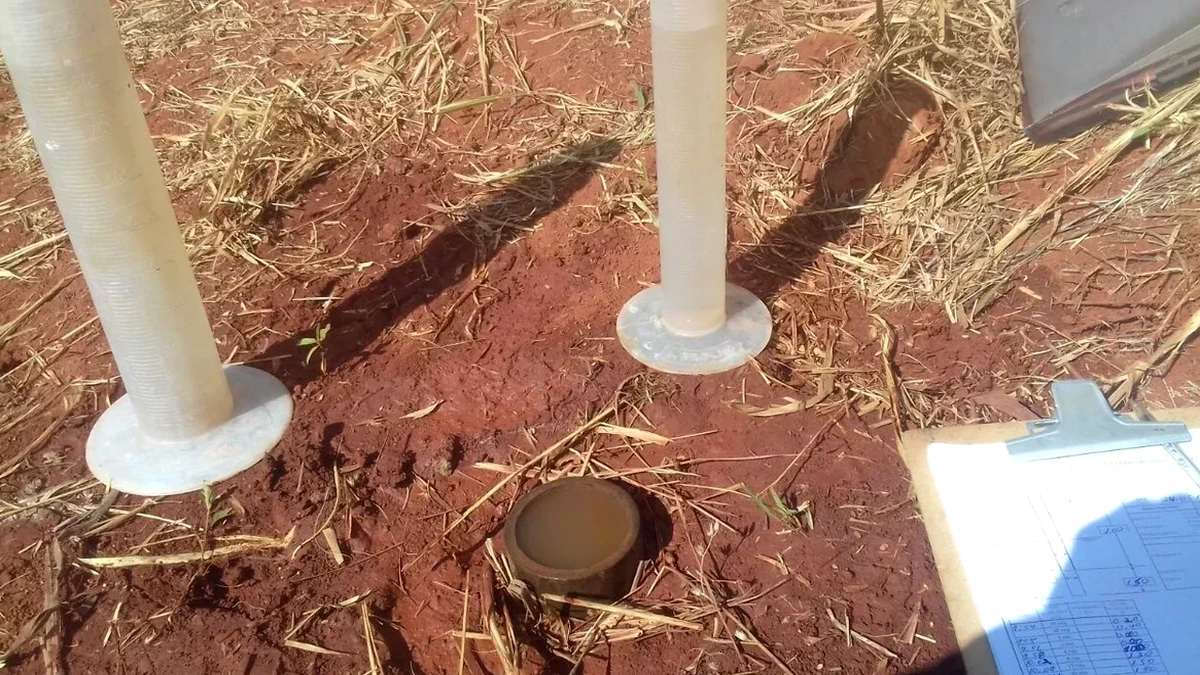
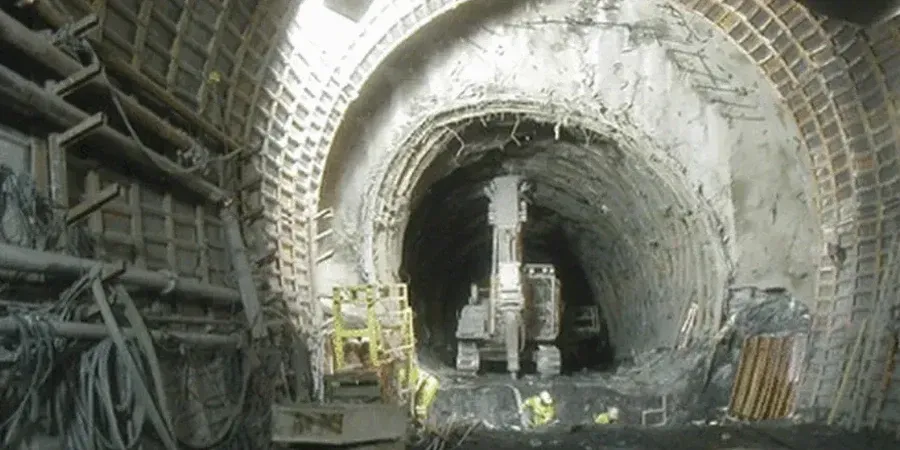
The Lugeon test requires a pneumatic packer and a calibrated flow meter mounted on the rig. We isolate a 3- to 5-meter section of the borehole in rock and pressurize it in stages—low, medium, high, back to medium. That pressure cycle tells us whether the fractures are dilating or clogging. Down in the Gills Creek basin, we often find partially weathered granite that gives misleading 'low flow' readings if the packer isn't set right. The Lefranc test is simpler but just as critical for filter design. We use a constant-head method in sandy lenses between the red clays typical of the Wateree formation. The data feeds directly into the soft ground tunnel stability models when groundwater control is the primary concern. For embankment cores, we verify that the compacted clay meets the 1x10^-7 cm/s threshold often required by SCDOT specs.
Field Permeability Testing (Lefranc & Lugeon) in Columbia SC
Technical reference — Columbia South Carolina

Local considerations

The soil profile changes fast here. Over near the Saluda River, you hit fresh hard gneiss at 15 feet. Out east toward Fort Jackson, the saprolite zone can run 60 feet deep. Assuming the permeability of that saprolite is 'low' just because it looks like clay is a mistake. We've seen relict joints in saprolite transmit water like a pipe network. It causes unexpected blowouts during deep excavations if the contractor relies on generic lab values. The biggest risk we see is ignoring the transition zone at the rockhead. Water doesn't just flow through the rock mass; it flows along the interface between soil and bedrock. A single Lugeon test in deep rock won't catch that shallow seepage path. You need a combined approach.

Need a geotechnical assessment?

Reply within 24h.

Email: contact@geotechnical-engineering.vip

Applicable standards

ASTM D5092-15 (Rock Packer Tests), ASTM D6391-11 (Field Permeability in Soil), SCDOT Standard Specifications Section 801, USBR Design Standard No. 13 - Embankment Dams

Typical values

ParameterTypical value
Test Standard (Rock)ASTM D5092, USBR 7300
Test Standard (Soil)ASTM D6391, Lefranc Method
Packer TypePneumatic single/double packer
Pressure Cycle5-stage (Low-Med-High-Med-Low)
Lugeon CoefficientWater loss in L/min per m at 1 MPa
Soil Test ZonesVariable head or constant head method
Minimum Borehole DiameterNQ (75.7 mm) for rock testing

Common questions

What is the difference between a Lefranc and a Lugeon test?

The Lefranc test measures permeability in soil or very soft rock using a simple slotted casing. The Lugeon test is for hard, fractured rock and uses a packer to isolate a section of the borehole. You apply high pressure in a Lugeon test to see how the fractures open up.

How much does a field permeability test cost in Columbia?
How deep do you need to drill for a Lugeon test?

It depends entirely on the rockhead depth. In the Columbia area, we often start testing as soon as we hit competent rock, usually anywhere from 15 to 60 feet. We need a clean hole to set the packer seal properly.

Do you test inside the saturated zone or above it?

Location and service area

We serve projects across Columbia South Carolina and surrounding areas.

View larger map