Technical studies that support your project.
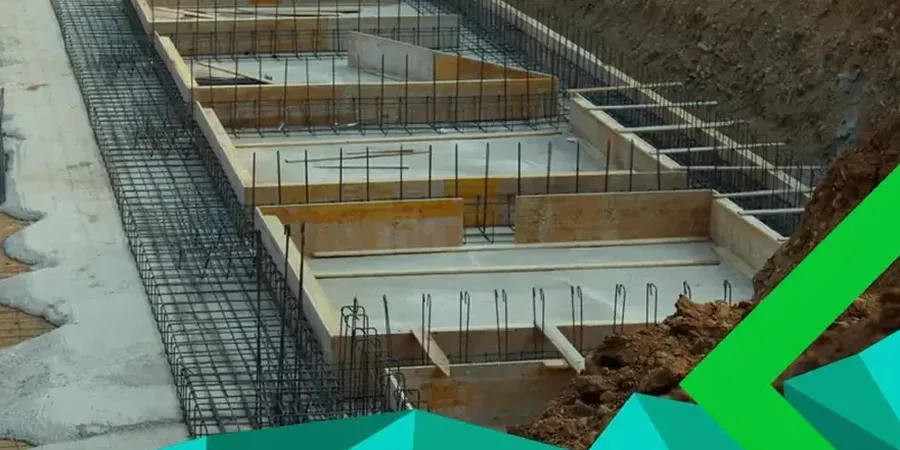
LEARN MOREFoundation engineering in Columbia, South Carolina, encompasses the critical subgrade analysis, design, and construction oversight required to support any structure safely. This category covers everything from shallow footings and slab-on-grade systems to advanced deep foundation solutions, including pile foundation design, drilled shafts, and ground improvement. Given Columbia's position in the Midlands region, where subsurface conditions can shift dramatically within a single site, a rigorous geotechnical investigation is not merely a best practice—it is a structural necessity. The long-term performance of residential, commercial, and infrastructure projects hinges on how well the foundation system accounts for local soil behavior, seasonal moisture fluctuations, and load-bearing requirements.
The geology of Columbia is dominated by the Fall Line, a transitional boundary separating the crystalline bedrock of the Piedmont to the west from the softer, porous Coastal Plain sediments to the east. This unique positioning creates highly variable conditions: residual silty sands, sandy silts, and partially weathered rock are common, often underlain by competent gneiss or schist. In the river corridors near the Congaree, Saluda, and Broad Rivers, alluvial deposits introduce layers of loose sands and soft clays with low blow counts. These conditions demand careful evaluation of bearing capacity and settlement potential, as weak lenses can compromise a conventional shallow foundation. Expansive clay behavior is less prevalent here than in other parts of the Southeast, but seasonal moisture variations in the upper vadose zone can still induce differential movement, making proper site drainage and foundation depth essential components of the design process.
All foundation work in South Carolina must comply with the International Building Code (IBC), as adopted and amended by the state, with local jurisdictions like the City of Columbia enforcing specific amendments. Geotechnical investigations are mandated to follow standards set by the American Society of Civil Engineers (ASCE) and testing protocols from ASTM International, particularly for soil classification, compaction, and strength. For deep foundations, the design must adhere to IBC Chapter 18, which references ACI 318 for structural concrete and AISC 360 for steel elements. Engineers of record must be licensed in South Carolina, and their reports must clearly recommend foundation types based on site-specific data, groundwater observations, and structural loads. The South Carolina Department of Health and Environmental Control (SCDHEC) may also impose additional requirements for erosion and sediment control during construction, directly influencing foundation excavation and site preparation strategies.
Projects requiring specialized foundation engineering are diverse across the Columbia metropolitan area. Multistory commercial developments in the Vista or BullStreet District often demand deep foundations or ground modification to handle heavy column loads on variable strata. Residential subdivisions expanding into Lexington and Richland counties routinely need cut-and-fill evaluations and foundation drain designs to manage the interface between natural soils and compacted fills. Critical infrastructure, such as water treatment plants near Lake Murray or bridge abutments along I-26 and I-77, relies on high-capacity deep foundations to ensure stability under dynamic and lateral loads. Even light industrial warehouses with sensitive floor slabs benefit from rigorous subgrade preparation specifications to prevent cracking under forklift traffic. In each scenario, the foundation category serves as the unifying discipline that translates raw geotechnical data into a safe, constructible, and durable support system.
The most frequent issues stem from the Fall Line geology, where abrupt changes between Piedmont residual soils and Coastal Plain sediments cause differential settlement. Loose alluvial sands near rivers can be prone to scour or bearing capacity failure, while silty fills common in developed areas may consolidate unevenly over time, leading to slab cracking and structural distress.
Deep foundations become necessary when near-surface soils are too weak, compressible, or variable to safely support structural loads. This often occurs in river floodplains with thick soft clay layers, on sites with undocumented fill, or for heavy structures like mid-rise buildings. A geotechnical investigation will identify when bearing capacity drops below 1,500 psf or when total settlement exceeds tolerable limits.
South Carolina adopts the International Building Code (IBC) with state-specific amendments. Chapter 18 of the IBC regulates excavation, grading, and fill, and mandates that foundation designs be based on a geotechnical report. It prescribes minimum embedment depths, allowable bearing pressures verified by testing, and lateral resistance requirements, all enforced through local building permits and inspections.
Groundwater is a critical factor, especially in low-lying areas and river corridors where the water table is seasonally high. It can reduce effective soil strength, cause buoyancy issues for underground structures, and complicate excavation. Foundation designs must account for hydrostatic pressure, potential seepage, and the need for permanent dewatering or waterproofing systems to maintain long-term integrity.
We serve projects across Columbia South Carolina and surrounding areas.