GEOTECHNICAL ENGINEERING
COLUMBIA SOUTH CAROLINA
HomeInvestigationCPT (Cone Penetration Test)

CPT Testing in Columbia SC — Cone Penetration Test Services

Technical studies that support your project.

LEARN MORE

Columbia’s growth from a planned state capital on the Congaree River bluffs has pushed development into the floodplain and across deep sedimentary formations. The Fall Line that cuts through the city creates abrupt transitions between Piedmont residuum and Coastal Plain deposits — a challenge for any geotechnical program. Here, test pits can hit refusal in saprolite within a meter, while borehole-based SPT drilling struggles to resolve thin sand seams within the Cooper Marl. CPT testing bridges this gap, delivering continuous stratigraphic profiles where traditional methods lose resolution.

Cone data resolves thin sand seams and soft clay lenses that split-spoon sampling misses — essential where the Fall Line geology transitions within a single site.
Our service areas

How we work

Field crews working in Richland and Lexington counties often encounter the Santee Limestone at unpredictable depths. Standard split-spoon sampling skips right over loose interbeds that govern settlement. The cone penetrometer reads those transitions every 2 centimeters. Tip resistance, sleeve friction, and pore pressure are recorded simultaneously, allowing direct calculation of soil behavior type without the disturbance of sample recovery. In Columbia’s Piedmont-derived silts, this matters. A single CPT sounding can replace five boreholes when the goal is defining layer boundaries for shallow footings or embankment stability. Results feed directly into liquefaction triggering analyses per Boulanger & Idriss and settlement estimates that hold up during IBC plan review.
CPT Testing in Columbia SC — Cone Penetration Test Services
Technical reference — Columbia South Carolina

Local considerations

The Cooper Marl underlying downtown Columbia is a calcareous, fissured clay that drains slowly and creeps under load. CPT data is the most reliable way to map its thickness and consistency. Near the Congaree and Broad rivers, loose alluvial sands are subject to liquefaction under the design earthquake — ASCE 7-22 requires site-specific analysis for Site Class F. Cone data provides the cyclic resistance ratio needed for simplified procedures. Omitting CPT in these zones risks missing a liquefiable layer that could trigger differential settlement across the footprint. In the Piedmont residual soils, refusal on partially weathered rock can occur above 20 MPa tip resistance; knowing exactly where refusal happens prevents over-design of deep foundations.

Need a geotechnical assessment?

Reply within 24h.

Email: contact@geotechnical-engineering.vip

Applicable standards

ASTM D5778-20 — Standard Test Method for Electronic Friction Cone and Piezocone Penetration Testing, ASCE 7-22 — Minimum Design Loads and Associated Criteria for Buildings and Other Structures (Site Classification), IBC 2021 Section 1803 — Geotechnical Investigations (Columbia adopted code), Robertson & Cabal (2015) — Guide to Cone Penetration Testing (Gregg Drilling), Boulanger & Idriss (2014) — CPT and SPT Based Liquefaction Triggering Procedures

Typical values

ParameterTypical value
Tip resistance (qc)0–50 MPa (typical range for Columbia soils)
Sleeve friction (fs)0–500 kPa; used to derive friction ratio (Rf)
Pore pressure (u2)Measured behind cone tip; allows correction to qt
Soil Behavior Type (SBT)Robertson (2016) normalized SBTn chart
Equivalent SPT N60Derived via Lunne & Robertson correlation
Undrained shear strength (su)Nkt factor calibrated to local geology
Constrained modulus (M)From Robertson (2009) for settlement analysis
Piezocone dissipation testt50 for consolidation coefficient estimate

Common questions

What depth can CPT reach in Columbia's Piedmont soils?

In the Piedmont residual silts and saprolite, refusal typically occurs between 15 and 25 meters when tip resistance exceeds 20 MPa. The cone cannot penetrate rock; for sites requiring characterization below the saprolite interface, rotary coring is the next step. In the Coastal Plain sediments south of the Fall Line, 30-meter soundings are routine before auger refusal.

How does CPT compare to SPT for Columbia's geology?

SPT provides a disturbed sample and an N-value at 1.5-meter intervals. CPT produces a nearly continuous profile of tip resistance, sleeve friction, and pore pressure every 2 centimeters. In the interbedded sands and clays of the Congaree Formation, CPT resolves thin layers — 50 mm or less — that SPT completely misses. The downside: no soil sample for visual classification or lab testing.

Is CPT accepted by Columbia building officials for foundation design?

Yes. IBC Section 1803 allows CPT as a primary subsurface exploration method. Most structural engineers in Columbia accept CPT-derived parameters — equivalent SPT N60, undrained shear strength, and constrained modulus — for shallow foundation design. For deep foundations, CPT-based pile capacity methods like LCPC and ICP-05 are widely used and approved.

What does CPT testing cost in Columbia, SC?
Do you need traffic control for CPT work in downtown Columbia?

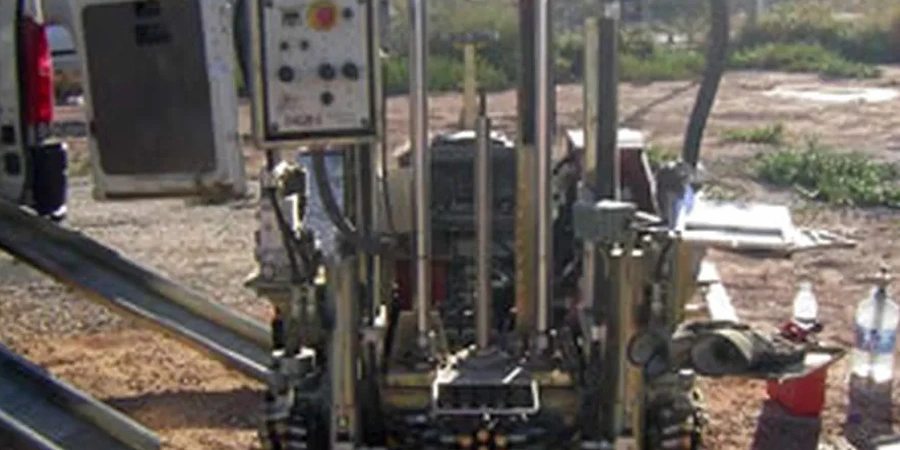
Yes, when soundings are located within the right-of-way or on-street parking lanes. Our team coordinates with the City of Columbia Public Works for lane closure permits. The CPT rig is a compact track-mounted unit that fits in a single parking space, so most commercial site work requires no traffic disruption.

Location and service area

We serve projects across Columbia South Carolina and surrounding areas.

View larger map