Technical studies that support your project.
LEARN MOREGeotechnical and environmental site investigation in Columbia, South Carolina forms the essential foundation for safe, compliant, and cost-effective construction across the Midlands region. This category encompasses a full spectrum of subsurface exploration techniques, soil and groundwater sampling, laboratory testing, and engineering analysis designed to characterize the physical and chemical properties of the ground beneath a proposed development. In a city experiencing steady commercial and residential growth, understanding what lies below the surface is not merely a best practice but a regulatory and financial necessity. From the expansive clay soils that challenge foundation designers to the shallow groundwater conditions prevalent in many parts of the metro area, a thorough investigation program identifies geohazards early, allowing project teams to mitigate risks before they escalate into costly failures or delays.
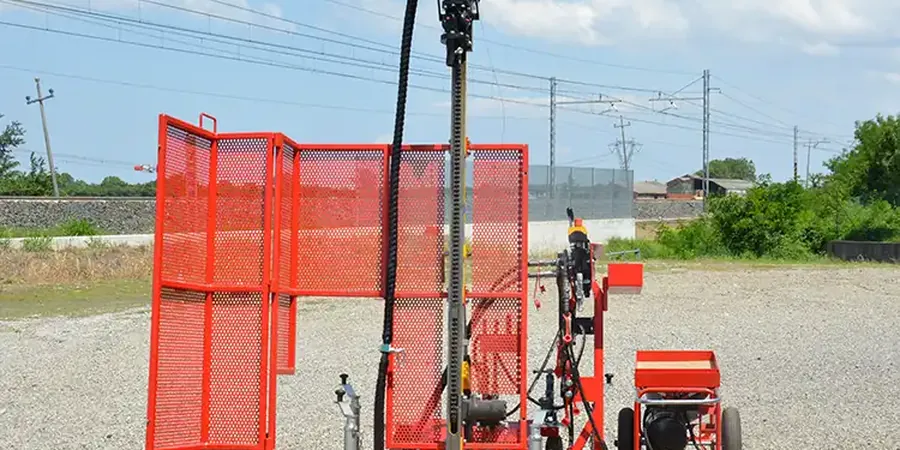
The importance of robust site investigation in Columbia is underscored by the region's complex geology, which transitions between the Piedmont and the Atlantic Coastal Plain. The Fall Line, a significant geologic boundary, runs through the Columbia area, creating a varied subsurface profile that can change dramatically over short distances. Upland areas often feature residual silty clays and partially weathered rock derived from the underlying granite and metamorphic formations, while lower-lying zones toward the Congaree River and its tributaries are characterized by alluvial sands, soft clays, and organic deposits. These conditions directly influence foundation selection, earthwork specifications, and stormwater management design. A critical tool for navigating this variability is the CPT (Cone Penetration Test), which provides continuous, high-resolution data on soil stratigraphy and engineering parameters without the disturbance associated with traditional drilling methods.
Regulatory compliance in South Carolina mandates that geotechnical investigations adhere to the South Carolina Building Codes Council, which adopts the International Building Code (IBC) with state-specific amendments. Chapter 18 of the IBC governs soils and foundations, requiring a comprehensive geotechnical report for all structures falling under its scope. The report must address bearing capacity, lateral earth pressures, settlement potential, and seismic site classification in accordance with ASCE 7 and IBC Section 1613. Furthermore, environmental site assessments in Columbia often follow the ASTM E1527-21 standard for Phase I Environmental Site Assessments, a critical step for commercial property transactions to satisfy CERCLA innocent landowner defenses. The South Carolina Department of Health and Environmental Control (SCDHEC) oversees the investigation and remediation of contaminated sites under the Brownfields/Voluntary Cleanup Program, making rigorous subsurface investigation a cornerstone of regulatory closure and redevelopment.
The types of projects requiring comprehensive investigation services in the Columbia metropolitan area span virtually every sector of the built environment. Commercial developers planning multi-story office buildings, retail centers, or industrial warehouses in hubs like Cayce, West Columbia, or the BullStreet District depend on detailed geotechnical reports to optimize foundation systems and pavement designs. Public infrastructure projects, including road widenings, bridge replacements, and utility expansions managed by the South Carolina Department of Transportation (SCDOT), demand investigation programs that strictly follow agency-specific protocols and standard specifications. Residential subdivisions, particularly those on challenging hillside lots or near floodplains, require careful evaluation of slope stability and drainage characteristics. Even smaller-scale projects such as retaining walls, cell towers, and solar farms benefit from a targeted investigation that may incorporate the CPT (Cone Penetration Test) for rapid and economical profiling across large sites.
A geotechnical site investigation evaluates subsurface soil, rock, and groundwater conditions to guide foundation design, earthwork, and risk mitigation. In Columbia, it is required under the South Carolina-adopted International Building Code for virtually all new structures, additions, and retaining walls. The resulting report provides engineers with bearing capacities, settlement estimates, and seismic classifications essential for safe, code-compliant construction and is typically mandated before a building permit can be issued.
Columbia sits near the Fall Line, creating abrupt transitions from Piedmont residual clays and weathered rock to Coastal Plain sands and soft alluvium. These variable conditions demand a flexible investigation plan that may combine borings, test pits, and in-situ tests like the CPT. Expansive clays, shallow groundwater, and karst features in some areas necessitate specialized sampling and laboratory testing to accurately predict foundation performance and avoid future structural distress.
The process begins with a Phase I environmental assessment to identify recognized environmental conditions, followed by a geotechnical scope that includes utility clearance, field exploration via drilling or CPT, laboratory testing, and engineering analysis. For a typical commercial lot in Columbia, field work may take one to three days, with the final report delivered within two to four weeks. Factors such as site access, required permitting, and laboratory turnaround times influence the overall schedule.
A Phase I ESA, following ASTM E1527, is a non-intrusive due diligence process focused on identifying historical contamination risks and potential environmental liabilities. It does not involve soil sampling for engineering properties. A geotechnical investigation is an intrusive study that collects physical soil and rock samples to determine engineering characteristics like strength, compressibility, and permeability. Both are often required for commercial transactions and development in Columbia but serve distinctly different regulatory and design purposes.
We serve projects across Columbia South Carolina and surrounding areas.